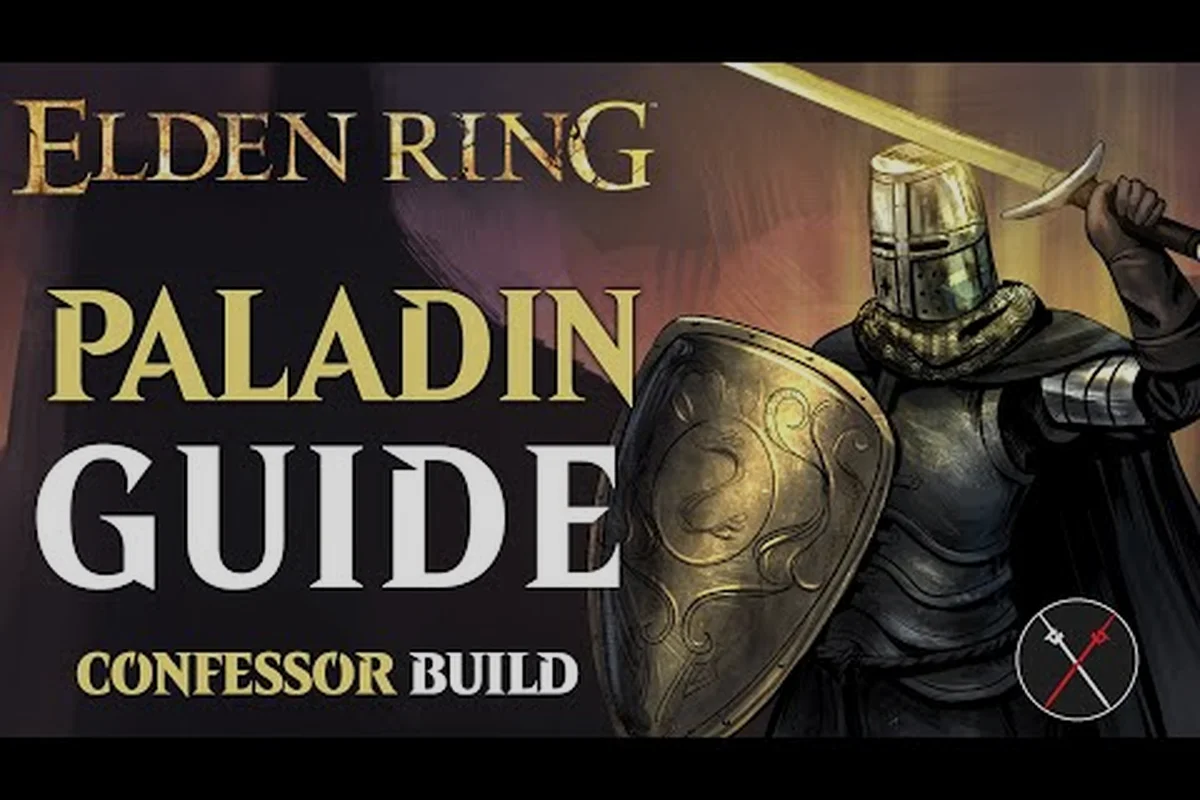
The elden ring confessor class stands apart from every other starting class because it hands you a complete faith-melee hybrid toolkit from minute one—a broadsword for close combat, a finger seal for incantations, and medium armor that actually absorbs hits. According to the official ELDEN RING Tarnished Edition page on Bandai Namco's site, the Confessor begins at level 10 with a stat spread that supports both casting and melee: Vigor 10, Mind 13, Endurance 10, Strength 12, Dexterity 11, Intelligence 9, Faith 14, and Arcane 9. That Faith value is the third-highest among all starters, beaten only by the Prophet and Astrologer, which makes this class the best balanced faith-melee hybrid start in the game. Because you do not need to invest heavily in offensive stats early on, you can pour runes into Vigor and Mind instead, which keeps you alive longer while your incantations and sword work together. The real question is whether this class fits how you want to play—and that answer depends on your tolerance for managing two resource pools and learning when to cast versus when to swing.
Confessor Starting Gear and Stat Breakdown
The elden ring confessor class ships with a loadout that feels deliberately designed for players who want to try faith without committing to a pure caster. Your starting weapon is the broadsword, a straight sword that scales primarily with Strength and Dexterity, but because it can be infused with Sacred or Flame Art affinities later, it becomes an excellent vehicle for Faith scaling once you find the right whetblade. The finger seal in your off-hand lets you cast incantations immediately, and the Assassin's Approach incantation you start with silences your footsteps for a short duration—a tool that veteran players use to backstab enemies or bypass overworld threats entirely. Your armor set is a Confessor's armor set with medium weight, offering solid physical and magical defense for the early game while keeping your equip load below the heavy threshold so you can still roll effectively.
Level 10 Attribute Allocation Explained
| Stat | Value | Why It Matters |
|---|---|---|
| Vigor | 10 | Bare minimum for survival; prioritize raising this first |
| Mind | 13 | Enough FP for 4-5 incantation casts before needing a flask |
| Endurance | 10 | Supports medium armor and 4-5 sword swings |
| Strength | 12 | Meets the requirement for most early straight swords |
| Dexterity | 11 | Unlocks the broadsword and most basic curved swords |
| Intelligence | 9 | No spellcasting use; ignore this stat entirely |
| Faith | 14 | Casts nearly every early-game incantation available |
| Arcane | 9 | Completely irrelevant unless you pivot to bleed builds |
This stat spread means you can equip Catch Flame, Urgent Heal, and Flame Sling the moment you buy them, which we will cover in the next section. The Mind value of 13 is particularly generous because it gives you enough FP to cast multiple incantations in a single fight without chugging a flask, something the elden ring prophet class struggles with at level 7 when it only has 11 Mind. Compared to the elden ring hero class, which starts with 14 Strength and 9 Faith, the Confessor trades raw melee power for the ability to heal and buff without investing in a secondary stat. Community reports on the Fextralife wiki indicate that players who stick with the Confessor through the mid-game find the starting Faith of 14 pays dividends once they reach Altus Plateau, where the best faith-scaling weapons and incantations become available. The Confessor's armor set also carries a subtle advantage: its poise value of 24 lets you tank one hit from a basic soldier without staggering, which opens up trades that lighter classes like the elden ring bandit class simply cannot afford.
Early Incantations and Faith Scaling Weapons
Your first trip to the Roundtable Hold should include a stop at Brother Corhyn, the faith merchant who sells incantations for a modest number of runes. The elden ring confessor class already has Assassin's Approach, but Corhyn offers three spells that dramatically expand your combat options: Catch Flame for 600 runes, Urgent Heal for 800 runes, and Flame Sling for 1,200 runes. Catch Flame is a close-range burst that comes out fast and costs only 7 FP, making it your bread-and-butter damage tool for the first ten hours. Urgent Heal costs 24 FP and restores a modest chunk of HP, which means you can save your crimson flasks for emergencies instead of chugging after every skirmish. Flame Sling costs 16 FP and lobs a fireball that travels slowly but hits hard, giving you a ranged option for pulling enemies or punishing slow-walking bosses.
Best Faith Weapons to Pair With the Confessor
| Weapon | Location | Faith Scaling | Why It Works |
|---|---|---|---|
| Sacred Broadsword | Infuse your starter weapon | B at +6 | Keeps your familiar moveset with holy damage |
| Cipher Pata | Roundtable Hold (finger reader) | S at base | Pure faith weapon, no stat investment needed |
| Winged Scythe | Tombsward Ruins, Weeping Peninsula | C at base | Bleed + holy damage with a unique weapon skill |
| Golden Halberd | Tree Sentinel drop | D at base | High damage but requires 30 Strength |
The Cipher Pata deserves special attention because it requires zero Strength or Dexterity investment—just 30 Faith—which means you can dump every level into Vigor and Mind while still dealing respectable damage. Community testing from the Elden Ring subreddit shows that a Confessor with 30 Faith and the Cipher Pata can clear Stormveil Castle without upgrading a single weapon, because the unblockable holy damage bypasses most enemy shields. The Winged Scythe is another strong option because it adds bleed buildup on top of holy damage, and its weapon skill, Angel's Wings, launches enemies into the air for a free critical hit. If you prefer to keep your broadsword, infusing it with the Sacred Blade Ash of War—found in the Weeping Peninsula—gives you a ranged holy projectile plus a temporary damage buff, which covers your need for both melee and distance fighting. The elden ring samurai class starts with the Uchigatana, which inflicts bleed but requires you to buy incantations from a merchant in Limgrave if you want any faith utility, so the Confessor's immediate access to a seal and spell saves you both runes and travel time.
Faith Build Progression Path for the Confessor
The elden ring confessor class progression splits into two viable routes, and your choice depends on whether you prefer casting or melee as your primary damage source. The hybrid route keeps your broadsword as the main weapon and uses incantations for healing, buffs, and occasional ranged damage; this route favors leveling Faith to 30, Vigor to 30, and Mind to 20 before touching anything else. The pure faith route focuses entirely on incantations and uses the Cipher Pata or Erdtree Seal as your main tools; this route pushes Faith to 40 early and relies on Lightning Spear and Black Flame for damage while keeping Vigor at 25 as a safety net.
Recommended Leveling Priority by Milestone
-
Level 20 (early Limgrave): Vigor to 15, Faith to 16, Mind to 15. This gives you enough HP to survive Margit's delayed attacks and enough FP for four casts of Catch Flame.
-
Level 40 (Stormveil Castle): Vigor to 20, Faith to 20, Mind to 18. Pick up Flame Sling and Urgent Heal if you have not already; the extra FP lets you cast six spells per flask.
-
Level 60 (Liurnia of the Lakes): Vigor to 25, Faith to 25, Mind to 20. Infuse your broadsword with Sacred Blade and consider grabbing Lightning Spear from the knight near the Artist's Shack.
-
Level 80 (Altus Plateau): Vigor to 30, Faith to 30, Mind to 22. This is where the build comes online; Black Flame melts boss HP bars and your sacred broadsword hits for 300+ per swing.
Because the elden ring confessor class starts with 14 Faith, you only need 11 more levels to hit the 25 Faith threshold for Lightning Spear, which is one of the best ranged incantations in the game. That efficiency advantage is why many players rank the Confessor above the elden ring prisoner class for hybrid builds—the Prisoner starts with 14 Intelligence and 14 Dexterity, which suits sorcery melee, but you cannot access healing incantations without a significant Faith investment. The elden ring warrior class faces a similar problem, because its dual curved swords and 16 Dexterity push you toward pure physical builds, leaving no room for faith without sacrificing your damage output. If you want to compare these options directly, the Tarnished Edition new classes guide breaks down all ten starters across multiple playstyle categories, including which ones transition into faith builds most smoothly.
Tarnished Edition Exclusive Gear and Switch 2 Performance
The Tarnished Edition introduces quality-of-life improvements that specifically benefit the elden ring confessor class on Switch 2. Players on the handheld report that the faith casting animations run at a stable 30 frames per second in handheld mode, which matters because incantation timing windows feel different when the frame rate dips. According to community testing on the Tarnished Edition subreddit, the finger seal casting speed in docked mode matches the PS5 version at 60 fps, so players who switch between handheld and docked need a brief adjustment period for spell timing. The Tarnished Edition also includes the Assassin's Approach incantation as a pre-order bonus that carries over to the base game if you purchase the DLC bundle, which means new Confessor players can skip the early trip to the merchant.
How Tarnished Edition Changes the Confessor Experience
| Feature | Tarnished Edition | Base Game Comparison |
|---|---|---|
| Load times | 40% faster on Switch 2 | 8-10 second loads on original hardware |
| FP regeneration | Small passive regen near Sites of Grace | No regen outside of flasks |
| Incantation tooltips | Show FP cost and scaling letter | Basic info only |
| Confessor armor set | Enhanced texture detail | Standard definition |
The faster load times matter more than you might think because the elden ring confessor class relies on trial-and-error to learn boss patterns—dying to Margit and reloading in under five seconds keeps you in the learning loop instead of staring at a loading screen. The passive FP regeneration near Sites of Grace also encourages you to practice incantation timing without burning through your crimson flasks, which is a subtle but meaningful quality-of-life boost for faith players. If you care about how your Confessor looks while wearing that starting armor, the fashion souls guide includes a breakdown of which armor pieces complement the Confessor's hooded aesthetic without compromising poise values.
Confessor vs Prophet vs Samurai: Which Class Wins
The elden ring confessor class competes directly with the elden ring prophet class for the title of best faith starter, and the choice comes down to early survivability versus raw casting power. The Prophet starts at level 7 with 14 Faith but only 10 Vigor, 11 Mind, and 8 Strength, which means you die in two hits and cannot equip anything heavier than a dagger at the start. The Confessor sacrifices one point of Faith for 10 extra levels worth of Vigor, Mind, and Strength, which translates to surviving three hits instead of two and wielding a real sword instead of a toothpick. The elden ring samurai class takes the opposite approach, starting with 15 Dexterity and a Uchigatana that inflicts bleed, but its 8 Faith means you must invest heavily to access even basic incantations.
Starting Class Comparison for Faith Builds
| Class | Starting Level | Faith | Vigor | Mind | Best For |
|---|---|---|---|---|---|
| Confessor | 10 | 14 | 10 | 13 | Balanced faith-melee hybrid |
| Prophet | 7 | 14 | 10 | 11 | Pure caster with early spells |
| Samurai | 9 | 8 | 12 | 11 | Bleed melee with late faith dip |
| Prisoner | 9 | 6 | 11 | 12 | Sorcery-melee hybrid |
| Bandit | 5 | 8 | 10 | 11 | Arcane builds, not faith |
| Hero | 7 | 9 | 14 | 9 | Strength with minimal faith |
What the table does not show is how each class feels in the first ten hours, and that is where the Confessor's medium armor and broadsword give it an edge over the Prophet's near-naked squishiness. The elden ring bandit class starts with 14 Arcane and a shortbow, which makes it the worst possible choice for a faith build because you would need to level Faith from 8 to 14 just to cast Catch Flame—a 6-level tax that the Confessor never pays. The elden ring hero class has the opposite problem: 14 Strength and 9 Faith mean you can swing a great axe effectively, but your incantations will hit like wet noodles until you invest 10+ levels into Faith. For players who want to eventually respec into a pure strength build, the Wretch class guide explains how starting with zero gear can actually be more efficient than picking a class that forces you down a specific path.
Advanced Confessor Tactics and Community Strategies
Once you master the basics of the elden ring confessor class, several advanced techniques separate good players from great ones. The first is spell-canceling, which involves starting an incantation animation and then rolling out of it before the spell fires; this baits enemies into attacking during your cast window, and you punish their whiff with a broadsword swing. The second technique is faith buff stacking, which combines Flame Grant Me Strength with Golden Vow to boost both physical and fire damage by roughly 35% for 30 seconds—enough time to melt most mini-bosses. The third technique is stagger management, which uses the Cipher Pata's unblockable damage to break enemy poise in three or four hits, setting up a critical strike that deals triple damage.
Community-Reported Confessor Build Variants
-
The Inquisitor (mid-game): 30 Faith, 25 Vigor, 20 Mind, using Winged Scythe and Black Flame. This build focuses on bleed and fire damage over time, and it excels against slow bosses like Godrick the Grafted.
-
The Holy Knight (late-game): 40 Faith, 30 Vigor, 25 Endurance, wearing heavy armor and using Erdtree Seal with Lightning Spear and Erdtree Heal. This build trades mobility for raw casting power and can heal through most boss attacks.
-
The Shadow (NG+): 35 Faith, 25 Dexterity, 20 Mind, using Black Knife and Assassin's Approach. This build leans into stealth backstabs and critical hits, taking advantage of the Confessor's starting incantation.
Players who enjoy theorycrafting builds should check the best class for magic guide for a broader comparison of hybrid caster options, because it covers how Faith builds interact with sorcery and incantation scaling across different stat distributions. The community consensus, based on multiple threads in the Elden Ring subreddit, is that the Confessor offers the smoothest transition into a faith-melee hybrid because you never waste levels on stats you will not use. That efficiency matters in a game where the level cap for most players lands between 120 and 150, and every wasted point means less damage, less HP, or less FP in the late game.
Frequently Asked Questions
What is the best weapon for the Confessor class early on?
The broadsword you start with is the best early weapon because it has a versatile moveset and can be infused with Sacred Blade once you find the Ash of War in Weeping Peninsula. Upgrade it to +3 before fighting Margit, and you will deal enough holy damage to break through his defenses.
Can the Confessor class use all incantations?
No, because your starting Faith of 14 only meets the requirement for early-game spells like Catch Flame and Urgent Heal. You need 25 Faith for Lightning Spear and 30 Faith for Golden Vow, so prioritize Faith levels if you want access to the full incantation catalog.
How does the Confessor compare to the Prophet for faith builds?
The Confessor trades one point of Faith for significantly better Vigor, Mind, and Strength, which makes it more survivable in melee combat. The Prophet casts slightly stronger spells early on but dies in two hits and cannot wield a real weapon without heavy investment.
Is the Confessor armor set worth keeping through the mid-game?
The Confessor armor set offers 24 poise and solid physical defense, which is enough for Limgrave and Liurnia. Once you reach Altus Plateau, consider upgrading to heavier armor or using the fashion souls guide to find pieces that match your playstyle.
Should I respec out of the Confessor class later?
Only if you pivot to pure sorcery or strength, wasting the 14 Faith and 13 Mind you invested. Otherwise, keep it—the Confessor's balanced stat spread is the best faith-melee hybrid foundation, scaling cleanly with incantations and the broadsword's Strength/Dexterity split.