
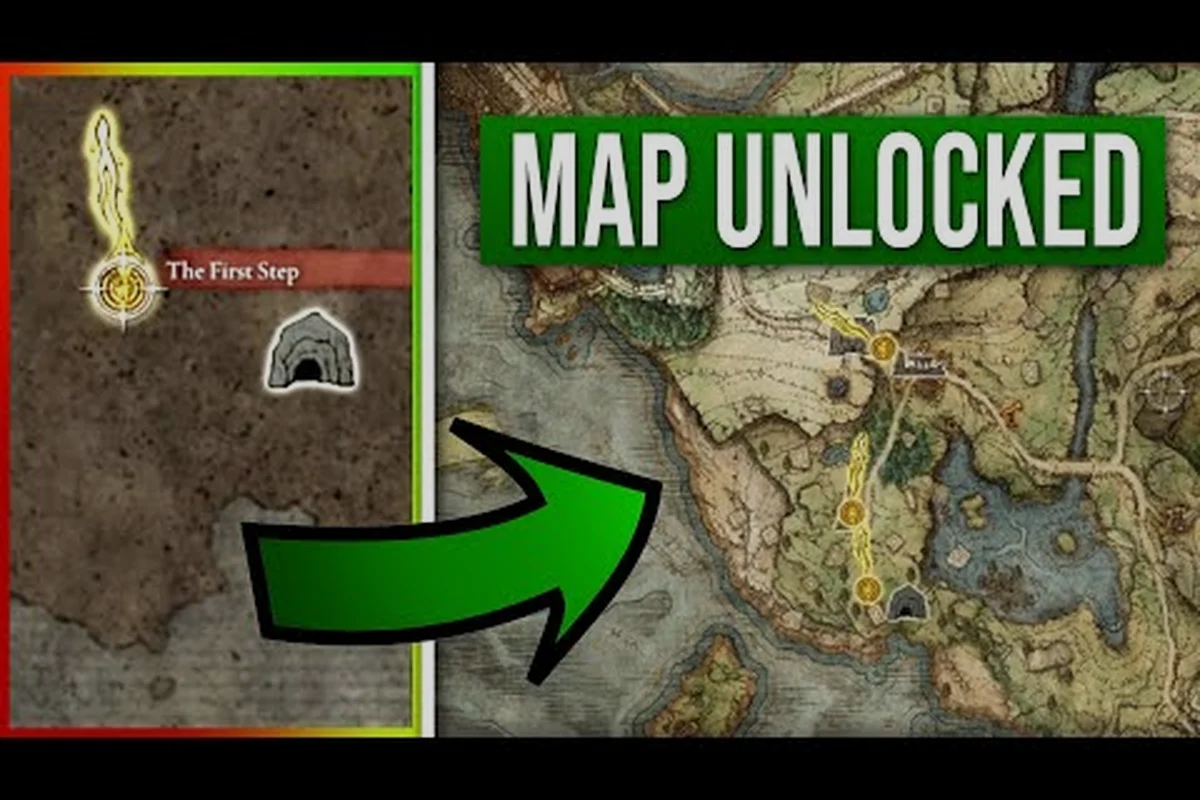
The ELDEN RING map is the single most important tool you have in the Lands Between, yet the game never explains how to read it properly. Unlike traditional open-world titles, the map starts blank and only reveals itself when you collect map fragments from stone monuments scattered across each region. Understanding the elden ring map structure transforms your playthrough because it turns aimless wandering into deliberate exploration, and the Tarnished Edition adds even more reason to master navigation with its expanded content and quality-of-life improvements.
The official Bandai Namco page for the ELDEN RING Tarnished Edition confirms that the Lands Between spans Limgrave, the Weeping Peninsula, Caelid, Liurnia, the Altus Plateau, Mt. Gelmir, the Mountaintops, and vast underground regions. Each area connects through specific routes, elevators, and grand lifts, and knowing these pathways saves you hours of backtracking. This guide breaks down every major region, explains where to find each map fragment, and details the fast travel routes that link all Sites of Grace together.
Reading the ELDEN RING Map and Understanding Region Connections
Map Fragment Monuments: The Stone Pillar Reveal Mechanic
Map fragments are not scattered loot—they sit at specific stone monuments shaped like obelisks, each glowing faintly when you approach. Touching one reveals the entire surrounding region's terrain, roads, and Sites of Grace, but not dungeons or boss icons. Limgrave's monument sits just east of the Gatefront Ruins, while Liurnia's is guarded by a Giant Land Squirt near Lake Liurnia's western shore. In the Tarnished Edition, the Weeping Peninsula fragment is found at the Castle Morne Rampart grace, saving you a blind trek through the peninsula's southern cliffs.
Siofra River's Elevator Descent and the Ancestral Woods
The Siofra River Well in eastern Limgrave is a hidden elevator shaft that drops you into an underground Eternal City region. The descent takes roughly 30 seconds, and the map fragment here is located at the Siofra River Bank grace—but the region's true value is the Ancestral Woods, where you fight the Ancestor Spirit boss. The Tarnished Edition's map shows this underground area as a separate layer, requiring you to toggle between surface and subterranean views. The elevator's activation costs no Stonesword Key, unlike the Ainsel River entrance.
The elden ring map operates on a layered system that most players overlook during their first ten hours. Surface regions appear as you collect fragments, but underground areas like Siofra River and Ainsel River require separate fragments found in their own depths. The map also tracks your discovered Sites of Grace, which serve as fast travel points, and marks key landmarks with small icons once you visit them.
Map fragment locations follow a consistent pattern: each region has one stone monument, usually positioned near a major road or landmark. When you approach one, a glowing pillar of light marks its position on your compass, making them easier to spot from a distance. The monument reveals the entire surrounding area on your map, including roads, ruins, and points of interest that were previously hidden.
| Region | Map Fragment Location | Recommended Entry Level |
|---|---|---|
| Limgrave | Gatefront Ruins, north of the starting area | 1-30 |
| Weeping Peninsula | Castle Morne Rampart, southern coast | 20-40 |
| Liurnia of the Lakes | Lake facing cliffs, east of the lake | 30-50 |
| Caelid | Fort Gael North, eastern edge | 50-70 |
| Altus Plateau | Abandoned Coffin, near the Grand Lift | 60-80 |
| Mt. Gelmir | Bridge of Iniquity, western approach | 70-90 |
| Mountaintops of the Giants | Frozen lake, central area | 90-120 |
The region connections matter more than raw level recommendations because they determine your progression path. Limgrave connects to the Weeping Peninsula through a southern bridge, while Liurnia sits north of Stormveil Castle. Caelid lurks east of Limgrave through a dangerous swamp crossing, and the Altus Plateau requires either the Grand Lift of Dectus with both medallion halves or a treacherous path through Ruin-Strewn Precipice. Mt. Gelmir branches off from western Liurnia, and the Mountaintops only open after you defeat Morgott in Leyndell.
Fast travel routes unlock automatically when you rest at a Site of Grace, and you can teleport between any discovered graces from the map screen. This system means your exploration strategy should prioritize finding graces over clearing every dungeon, because each new grace expands your travel network. The Tarnished Edition preserves this core loop while adding subtle improvements to map readability that veterans will appreciate.
Limgrave and the Weeping Peninsula: Your Starting Grounds
The elden ring limgrave guide starts with understanding that this region teaches you everything the game expects from you. Limgrave spans rolling green hills, ruined structures, and the imposing Stormveil Castle that dominates the northern skyline. The map fragment sits at Gatefront Ruins, which you will likely encounter within your first hour because the main road leads directly through it.
Limgrave's key locations include the Church of Elleh where Merchant Kale sells crafting tools, the First Step Site of Grace where you begin, and the Gatefront Ruins which house the map fragment and a crucial early-game encounter. The Mistwood to the east hides a giant bear and a mysterious howling that leads to a side quest, while the coastal areas south of the starting point contain caves and catacombs perfect for early rune farming.
| Limgrave Landmark | What You Find There | Why It Matters |
|---|---|---|
| Church of Elleh | Merchant Kale, crafting kit | First merchant, essential tools |
| Gatefront Ruins | Map fragment, soldiers, treasure | Reveals the entire region |
| Stormhill Shack | NPC encounter, warm stones | Early crafting materials |
| Mistwood | Giant bear, hidden quest | Optional content, unique rewards |
| Coastal Cave | Early dungeon, boss fight | First dungeon experience |
The Weeping Peninsula hangs below Limgrave, connected by a bridge guarded by a ballista emplacement. This southern region feels more dangerous despite its lower level range because it contains the Castle Morne questline, several challenging field bosses, and the Church of Marika where you can heal your flask charges. The map fragment here sits at Castle Morne Rampart, which requires you to fight past several enemies but rewards you with complete visibility of the peninsula's coastline.
Progression through Limgrave follows a natural arc: explore the southern peninsula first to gather levels and equipment, then tackle Stormveil Castle when you feel confident. The castle itself functions as a mini-dungeon with multiple paths, hidden rooms, and the first Great Rune boss, Godrick the Grafted. After clearing Stormveil, the path north opens into Liurnia, and your elden ring map expands significantly.
Liurnia of the Lakes and the Underground Rivers
Liurnia of the Lakes presents a dramatic shift from Limgrave's green fields, replacing them with misty waters, towering cliffs, and the massive Academy of Raya Lucaria floating in the center. The elden ring liurnia of the lakes region demands patience because its verticality and water-based navigation confuse many players. The map fragment sits at Lake-Facing Cliffs, which you reach shortly after leaving Stormveil through the northern exit.
Liurnia's structure splits into three distinct zones: the lake itself with its shallow waters and scattered ruins, the eastern cliffs leading to Caria Manor and the Three Sisters, and the western approach toward the Grand Lift of Dectus. Each zone contains its own Sites of Grace, field bosses, and secrets, making this region one of the densest on the elden ring map.
| Liurnia Zone | Key Locations | Notable Rewards |
|---|---|---|
| Lake Center | Academy Gate Town, Church of Vows | Sorcery scrolls, NPC quests |
| Eastern Cliffs | Caria Manor, Three Sisters | Royal Knight Loretta, Ranni's quest |
| Western Approach | Grand Lift of Dectus, Bellum Highway | Altus Plateau access, new enemies |
| Underground | Siofra River, Ainsel River | Ancestral Spirit boss, unique weapons |
The underground rivers deserve special attention because they exist as entirely separate layers on your elden ring map. Siofra River opens through a well in the Mistwood, while Ainsel River connects through Liurnia's northwest corner. These subterranean zones contain their own map fragments, which you find at the Worshippers' Woods in Siofra and the Ainsel River Main site in Ainsel. The Eternal Cities of Nokron and Nokstella sit even deeper, accessible only through specific quest progression.
Fast travel optimization in Liurnia means collecting the map fragment early, then methodically working through each zone. The Lake-Facing Cliffs grace connects you to the entire region, while the Bellum Church grace near the Grand Lift serves as your staging point for Altus Plateau. If you plan to explore the underground rivers, grab the Siofra River Well grace in Mistwood and the Ainsel River Well grace near Caria Manor to minimize travel time.
Caelid and the Scarlet Rot Wasteland
Caelid represents the elden ring map's most hostile environment, a scarlet rot-infested wasteland filled with terrifying creatures and brutal difficulty spikes. The elden ring caelid guide warns players to approach this region carefully, because even mid-level characters struggle against the rot-infused enemies and the infamous Starscourge Radahn. The map fragment sits at Fort Gael North, which you can reach by following the eastern road from Limgrave through the Smoldering Church.
Caelid's geography divides into the main wasteland, the Dragonbarrow to the northeast, and the Swamp of Aeonia in the south. Each area presents unique challenges: the wasteland teems with giant dogs and crows, the Dragonbarrow hosts powerful dragons including the sleeping Elder Dragon Greyoll, and the Swamp of Aeonia forces you through rot-infested waters while fighting the Cleanrot Knights.
| Caelid Area | Danger Level | Key Content |
|---|---|---|
| Main Wasteland | High | Fort Gael, Caelid Highway, minor dungeons |
| Dragonbarrow | Very High | Greyoll, Farum Greatbridge, Bestial Sanctum |
| Swamp of Aeonia | Extreme | Commander O'Neil, rot hazards, Millicent quest |
| Sellia Hideaway | High | Hidden sorcery town, boss fight |
The rot status effect defines Caelid's difficulty because it drains your health continuously until cured. Stock up on Preserving Boluses or equip armor with high robustness before venturing deep into the region. The Church of the Plague in the north sells a cookbook for rot cure items, and several merchants across the Lands Between stock the materials you need.
Caelid's connection to the wider map matters because it holds two critical progression paths. The first leads to the Grand Lift of Dectus's second medallion half, which you find in Fort Faroth on the Dragonbarrow's eastern edge. The second path involves the Redmane Castle in the south, where you fight Radahn and unlock access to Nokron, the Eternal City. Both routes make Caelid essential despite its hostility, so plan your visits carefully.
Altus Plateau, Mt. Gelmir, and the Path to Leyndell
The Altus Plateau opens after you activate the Grand Lift of Dectus with both medallion halves, and it represents the elden ring map's midpoint in both difficulty and narrative importance. The elden ring altus plateau region stretches across golden fields, ancient ruins, and the capital city of Leyndell, which dominates the eastern skyline. The map fragment sits at the Abandoned Coffin site, which you reach shortly after ascending the Grand Lift.
Altus Plateau's layout includes the main plateau, the Shaded Castle to the west, and the capital approach through the Outer Wall. The plateau itself contains numerous dungeons, field bosses, and the Windmill Village, while the Shaded Castle holds the Antspur Rapier and connects to a side quest involving Millicent. Leyndell itself functions as a massive legacy dungeon with multiple entrances and secrets.
| Altus Location | Key Features | Recommended Level |
|---|---|---|
| Grand Lift of Dectus | Medallion requirement, dramatic ascent | 60+ |
| Abandoned Coffin | Map fragment, starting point | 60+ |
| Shaded Castle | Antspur Rapier, Millicent quest | 65+ |
| Windmill Village | Celebrant enemies, unique drops | 65+ |
| Leyndell Outer Wall | Capital approach, first Leyndell graces | 70+ |
Mt. Gelmir branches off from western Altus through a treacherous mountain path filled with magma, giant hands, and the infamous Full-Grown Fallingstar Beast. The elden ring mt gelmir region houses Volcano Manor, a legacy dungeon with its own questline and the Rykard boss fight. The map fragment for Mt. Gelmir sits at the Bridge of Iniquity, which you reach by following the mountain road from the Seethewater Terminus grace.
Progression through Altus and Mt. Gelmir follows a logical order: secure the map fragments early, clear the plateau's minor dungeons for levels and equipment, then tackle either Leyndell or Volcano Manor depending on your build and quest progression. Leyndell requires defeating Draconic Tree Sentinel at the capital's entrance, while Volcano Manor offers an alternative path through a hidden teleporter in the mountain's depths.
Fast Travel Routes and Map Fragment Collection Strategy
Limgrave's Grace-Site Chain: The Optimal Early Route
Limgrave's Sites of Grace form a visible golden trail pointing toward Stormveil Castle, but the Tarnished Edition rewards detours. From the Church of Elleh, head south to the Gatefront Ruins for the map fragment, then east to Mistwood—where Blaidd's howl triggers a unique interaction—before circling back to Agheel Lake. This route nets you 6 graces, the Flask of Wondrous Physick at the Third Church of Marika, and roughly 12,000 runes from overworld bosses like the Flying Dragon Agheel, all before facing Margit at Stormgate.
Caelid's Rot-Infested Border: The Dragonbarrow Approach
Caelid's map fragment is at the Smoldering Church, but the Tarnished Edition's recommended entry is through the eastern Dragonbarrow, not the southern swamp. The Dragonbarrow's fragment sits near Fort Faroth, where you can grab the Radagon's Soreseal talisman—a +5 to all stats at the cost of 15% extra damage taken. This trade-off is critical for early-game builds: the talisman's stat boost lets you wield the Greatsword (requires 31 STR) by level 25, but the rot-infested enemies nearby deal 30% more damage per hit, making the Soreseal a high-risk, high-reward pickup.
Mastering fast travel routes transforms your elden ring map experience because it eliminates the tedium of backtracking through dangerous areas. Every Site of Grace you discover becomes a permanent teleportation point, and the game encourages aggressive exploration by rewarding you with new travel options. The Tarnished Edition maintains this system while improving load times and map responsiveness.
Optimal map fragment order follows your natural progression through the game, but you can deviate to grab fragments early if you want complete map visibility. The recommended sequence starts with Limgrave and the Weeping Peninsula, then Liurnia, Caelid, Altus Plateau, Mt. Gelmir, and finally the Mountaintops of the Giants. Underground fragments for Siofra and Ainsel Rivers should be collected when you explore those areas.
| Progression Step | Map Fragment | Fast Travel Hub |
|---|---|---|
| Start | Limgrave (Gatefront) | First Step, Church of Elleh |
| After Stormveil | Liurnia (Lake-Facing Cliffs) | Lake-Facing Cliffs, Bellum Church |
| Optional detour | Caelid (Fort Gael North) | Smoldering Church, Fort Gael |
| After Dectus | Altus Plateau (Abandoned Coffin) | Abandoned Coffin, Outer Wall |
| After Altus | Mt. Gelmir (Bridge of Iniquity) | Seethewater Terminus, Volcano Manor |
| After Morgott | Mountaintops (Frozen Lake) | Grand Lift of Rold, Frozen Lake |
Fast travel strategies that experienced players use include marking your current exploration zone on the map, using the roundtable hold as a central hub for upgrades and shopping, and always resting at new graces even if you plan to continue exploring. The map also allows you to fast travel from anywhere, even in combat, which serves as an emergency escape option when you encounter overwhelming enemies.
Hidden map layers exist beyond the surface regions, including the underground rivers, the Eternal Cities, and the Lake of Rot. Each layer has its own map fragment, and discovering them requires specific exploration or quest progression. The Lake of Rot, for example, sits beneath Ainsel River and connects to the Astel boss fight, while the Mohgwyn Dynasty Mausoleum requires a hidden teleporter in the Consecrated Snowfield. For a deeper look at these hidden areas, check our Lake of Rot location guide which covers the underground routes and their secrets.
Advanced Navigation Tips for the Tarnished Edition
The Tarnished Edition introduces subtle improvements to navigation that reward attentive players. The map now displays more detailed terrain information, making it easier to identify elevation changes and hidden pathways. Additionally, the game's performance improvements on newer hardware reduce loading times when fast traveling, which encourages more frequent map usage.
Navigation techniques that separate skilled players from casual explorers include reading the terrain for hidden paths, using the map's zoom function to spot small details, and paying attention to the direction of wind and weather effects. The map also shows the location of nearby map fragments as small icons when you zoom in, helping you plan your collection routes efficiently.
Common navigation mistakes include ignoring the underground layers, skipping map fragments in favor of direct progression, and failing to mark important locations. The map allows you to place custom markers, which you should use liberally to track boss locations, merchant positions, and unfinished exploration areas. These markers persist across sessions, making them invaluable for long playthroughs.
Community-reported navigation tips from the Elden Ring community on Reddit suggest that players who methodically clear each region before moving to the next have an easier time overall, because they enter new areas with appropriate levels and equipment. The same community reports that the map's underground layer indicator, which appears as a small icon when you approach hidden entrances, often goes unnoticed by new players.
Integration with the wider game means that your map knowledge directly affects your boss fight preparation. Knowing where to find specific weapons, armor, and upgrade materials requires understanding the elden ring map's layout, and players who rush through regions often miss crucial items. Our complete boss list guide covers which bosses appear in each region, helping you plan your exploration around the challenges ahead.
Frequently Asked Questions
How do I reveal the full ELDEN RING map?
You need to collect map fragments from stone monuments in each region. These monuments appear as glowing pillars of light on your compass, and interacting with them reveals the surrounding area on your map. Each major region has one fragment, including underground areas like Siofra River and Ainsel River.
What is the best order to explore regions in the ELDEN RING map?
Start with Limgrave and the Weeping Peninsula, then move to Liurnia of the Lakes. From there, you can tackle Caelid or proceed to the Altus Plateau through the Grand Lift of Dectus. Mt. Gelmir branches from Altus, and the Mountaintops of the Giants open after defeating Morgott in Leyndell.
How do I unlock fast travel between all Sites of Grace?
Fast travel unlocks automatically when you rest at any Site of Grace. Each grace becomes a permanent teleportation point on your map, and you can travel between any discovered graces from the map screen. There is no limit to how many graces you can discover, so explore aggressively to expand your travel network.
Where can I find the map fragments for underground areas?
Siofra River's fragment sits at the Worshippers' Woods, which you reach through a well in Limgrave's Mistwood. Ainsel River's fragment is at the Ainsel River Main site, accessible from Liurnia's northwest. The Eternal Cities and Lake of Rot have their own fragments found during quest progression.
Does the Tarnished Edition change the ELDEN RING map layout?
The Tarnished Edition preserves the original map layout while improving readability and performance. The core regions, map fragment locations, and fast travel system remain identical to the base game, so existing guides and community knowledge remain accurate for navigation purposes.