
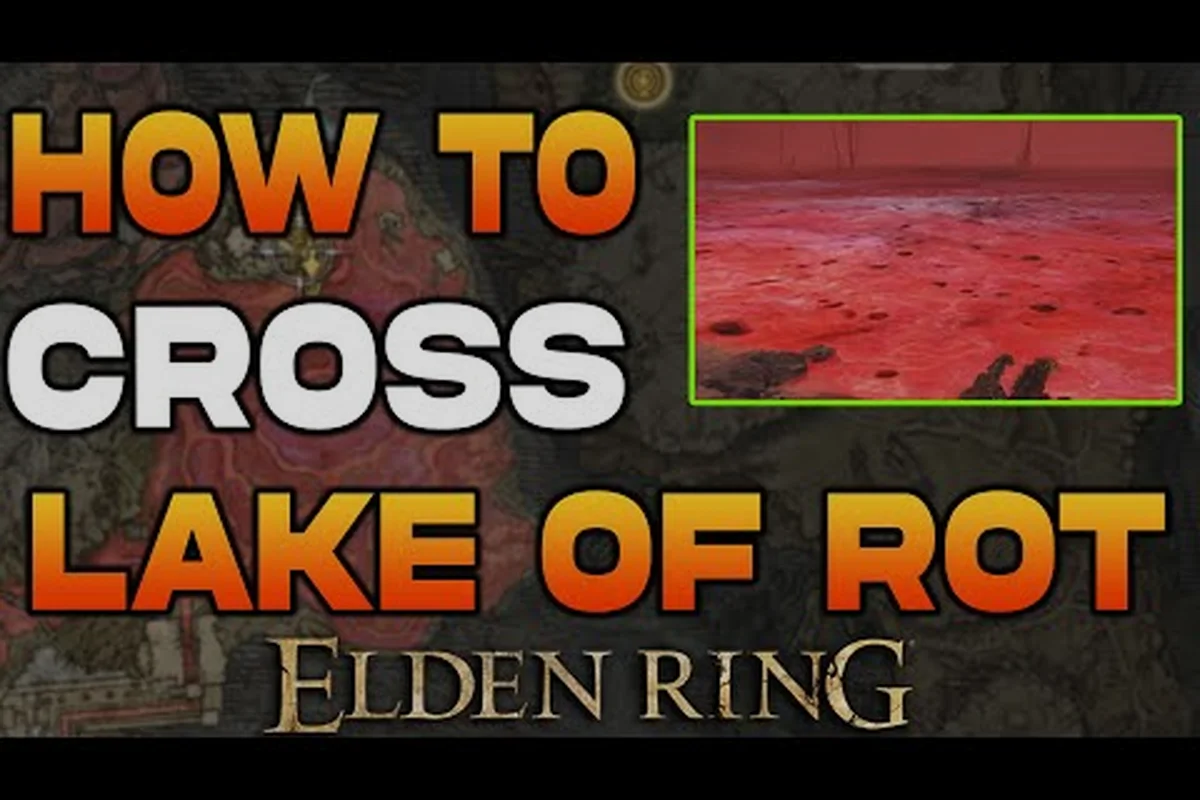
The Lake of Rot in ELDEN RING Tarnished Edition is one of the most punishing hidden areas in the entire game, sitting beneath the Ainsel River with scarlet rot that builds alarmingly fast. This guide covers the exact route through the lake, the gear that keeps you alive, and the secret boss waiting at the Grand Cloister. If you have been wondering how to cross this deadly basin without burning through every flask, the platform-switch mechanics and status-cure strategies below will save you hours of frustration. For more detail, see the map fragments you need to reach it, covered in our related guide.
Understanding the Lake of Rot Layout and Scarlet Rot Mechanics
Astel, Stars of Darkness: Boss Preparation and the Grand Cloister Fight
After crossing the Lake of Rot and entering the Grand Cloister, you face Astel, Stars of Darkness, a hidden boss that differs from the Astel encountered in the Ainsel River region. This variant has a distinct moveset, including a gravity-based grab attack that can one-shot players with lower Vigor. Before engaging, ensure you have at least 30 Vigor and equip a weapon with physical damage, as Astel is resistant to status effects like scarlet rot. The boss arena is enclosed, so use the pillars to break line-of-sight during its meteor shower attack. This fight is optional but rewards a significant number of Runes and a unique sorcery, making it worth the Lake of Rot traversal.
The Lake of Rot is a sprawling underground basin that connects the Ainsel River region to the Grand Cloister, and it is entirely flooded with scarlet rot that applies the Scarlet Rot status effect almost instantly upon contact. Unlike the rot swamps in Caelid, the lake's damage ticks are relentless, which means standing in the water for more than a few seconds will trigger the status buildup and start draining your HP at a dangerous rate. According to official Bandai Namco documentation for the Tarnished Edition, the lake sits beneath the Ainsel River and requires either Preserving Boluses or the Flame Cleanse Me incantation to manage the rot buildup effectively.
The lake is divided into several distinct sections, each with its own set of platform switches that drain portions of the water to create safe paths. The inner platform switches are the key mechanic here, because stepping on them lowers the rot level in specific zones, allowing you to cross without swimming through the contaminated water. Players who rush through without activating these switches often find themselves overwhelmed by the sheer volume of rot buildup, which is why the community consistently recommends a methodical approach that prioritizes switch activation over speed.
| Lake Section | Rot Buildup Rate | Key Feature | Recommended Approach |
|---|---|---|---|
| Entry Platform | Moderate | First switch location | Activate immediately |
| Central Basin | High | Multiple switch platforms | Use ranged attacks to trigger switches |
| Western Shallows | Very High | Item pickups in rot | Use Preserving Boluses liberally |
| Grand Cloister Approach | Extreme | Final switch sequence | Clear enemies before crossing |
| Hidden Boss Arena | Severe | Astel boss fight | Full status immunity gear |
The rot buildup rate increases dramatically as you move deeper into the lake, which means your immunity window shrinks with every step. Players report that the central basin is where most deaths occur, because the platform switches are spaced far enough apart that you will need to wade through rot between activations. The key is to time your movement between platforms so that you never let the status bar fill completely, and to keep a Preserving Bolus hotkeyed for emergency cleanses.
Essential Preparations Before Crossing the Lake
Before you even step into the rot, you need to prepare your character with the right equipment, consumables, and incantations, because the Lake of Rot punishes unprepared players without mercy. The Flame Cleanse Me incantation is arguably the most valuable tool for this area, since it removes scarlet rot buildup instantly and only requires 12 Faith to cast, making it accessible to most hybrid builds. If you do not have the Faith stats for this incantation, you will need to rely heavily on Preserving Boluses, which can be crafted using Land Octopus Ovary, Dewkissed Herba, and Sacramental Bud.
The Mushroom Crown helmet is another excellent choice for this area, because it increases your immunity to poison and rot while also boosting attack power when you are afflicted with either status effect. Players who pair the Mushroom Crown with the Immunizing Horn Charm talisman report significantly longer safe windows in the rot, since the charm boosts your immunity stat by a substantial margin. The Raptor's Black Feathers chest armor is less useful here, but the Mushroom set as a whole provides the best rot resistance in the game, making it the go-to choice for dedicated Lake of Rot runs.
| Preparation Item | Type | Effect | Where to Obtain |
|---|---|---|---|
| Preserving Boluses | Consumable | Cures scarlet rot | Crafting or Merchant |
| Flame Cleanse Me | Incantation | Removes rot buildup | Fire Monk Camp in Liurnia |
| Mushroom Crown | Helmet | Boosts immunity | Seethewater Cave |
| Immunizing Horn Charm | Talisman | Raises immunity stat | Weeping Peninsula |
| Lord of Blood's Exultation | Talisman | Boosts attack when bleeding | Mohgwyn Palace |
The Lord of Blood's Exultation talisman is a niche but powerful choice for this area, because the rot buildup counts as a status effect that can trigger its attack-boosting property when combined with bleed weapons. This creates a risky but rewarding playstyle where you intentionally let rot build slightly before cleansing, gaining a temporary damage boost that can melt enemies in the Grand Cloister. According to community reports, players who master this timing can clear the entire lake section in under ten minutes while maintaining a significant damage advantage.
Step-by-Step Route Through the Lake to the Grand Cloister
The route through the Lake of Rot follows a logical progression that begins at the Ainsel River Main grace and winds through the basin toward the Grand Cloister entrance. Start by descending into the lake and immediately activating the first platform switch, which drains the initial section and reveals a path forward. The second switch is located on a raised platform to the east, and you will need to wade through a shallow rot patch to reach it, so time your movement carefully and cleanse any buildup before proceeding.
The third and fourth switches are positioned in the central basin, and activating them drains the deeper water to expose a walkable path toward the western edge of the lake. This is where most players encounter the Basilisk enemies that patrol the area, and their death clouds can inflict both poison and rot, so it is wise to clear them from range before crossing. Once all four switches are active, the water level drops significantly, revealing a dry path that leads directly to the Grand Cloister entrance at the far end of the lake.
Navigating the Grand Cloister Interior
The Grand Cloister itself is a relatively short dungeon that connects the lake to the Astel, Stars of Darkness boss arena, and it contains several valuable item pickups along the way. The interior features a series of narrow walkways over more rot pools, so keep your Preserving Boluses ready even after you leave the main lake. You will encounter Kindred of Rot enemies here, which are aggressive melee fighters that can inflict rot with their attacks, making the Flame Cleanse Me incantation essential for this section.
The path through the cloister is linear, but it is easy to miss the Somber Smithing Stone pickups tucked into alcoves along the way, so explore thoroughly before descending to the boss arena. The boss door is located at the bottom of a long staircase, and entering it triggers the Astel, Stars of Darkness fight, which is a reskinned version of the Astel, Naturalborn of the Void boss from the main game. This hidden boss is optional, but defeating it rewards you with the Meteorite Staff alternative and access to a Larval Tear, making it worth the effort for completionists.
Comparing the Lake of Rot to Other Hidden Areas
The Lake of Rot is just one of several hidden areas in ELDEN RING Tarnished Edition, and understanding how it compares to other optional regions helps you plan your exploration route. The Lake of Rot is unique because it is a pure hazard-based area, where the environment itself is the primary threat rather than the enemies that inhabit it. This contrasts sharply with areas like the Mohgwyn Palace or the Consecrated Snowfield, which feature challenging enemies but relatively benign terrain.
| Hidden Area | Primary Threat | Difficulty Rating | Key Reward | Access Requirement |
|---|---|---|---|---|
| Lake of Rot | Scarlet rot buildup | High | Astel boss + Larval Tear | Ainsel River descent |
| Mohgwyn Palace | Enemy density | Very High | Mohg boss + Rune farm | Varre questline |
| Consecrated Snowfield | Visibility + enemies | High | Haligtree access | Two medallion halves |
| Deeproot Depths | Enemy variety | Medium | Fia's questline | Valiant Gargoyles |
| Nokron, Eternal City | Enemy ambushes | Medium | Fingerslayer Blade | Starfall event |
The elden ring how to reach the haligtree question often comes up in the same conversation as the Lake of Rot, because both areas require completing significant prerequisite steps. The Haligtree requires both halves of the Haligtree Secret Medallion, which are found in the Village of the Albinaurics and the Castle Sol respectively, while the Lake of Rot simply requires progressing through Ranni's questline to the Ainsel River. Players who prioritize exploration will find that the Lake of Rot is actually one of the more accessible hidden areas, since it does not require any specific questline completion beyond reaching the underground river.
Strategic Build Recommendations for the Lake of Rot
Your build choices significantly impact how smoothly you can navigate the Lake of Rot, and certain weapon types and stat allocations make the area considerably easier. Ranged weapons are invaluable here, because they allow you to trigger platform switches from a safe distance without wading through rot to reach them. The Meteorite Staff is particularly effective for this purpose, since its Gravity Well spell can pull enemies off ledges and its Rock Sling spell can hit switches from surprising angles.
Faith-based builds have a distinct advantage in this area because of the Flame Cleanse Me incantation, which completely negates the need for consumable boluses. Players who invest at least 12 Faith can cast this incantation repeatedly, making the entire lake crossing significantly safer and more efficient. Intelligence builds can achieve similar results by using the Starlight Shards consumable to restore FP, though this is less efficient than the Faith approach.
| Build Type | Rot Management | Recommended Gear | Difficulty Level |
|---|---|---|---|
| Faith Hybrid | Flame Cleanse Me | Erdtree Seal + Mushroom set | Easy |
| Intelligence | Preserving Boluses | Meteorite Staff + Rock Sling | Moderate |
| Strength | Preserving Boluses | Greatsword + Immunizing Charm | Hard |
| Dexterity | Preserving Boluses | Uchigatana + Blood Grease | Hard |
| Quality | Mixed approach | Claymore + Faith investment | Moderate |
Melee-focused builds face the greatest challenge in the Lake of Rot, because they must physically cross the contaminated water to reach switches and enemies. The Immunizing Horn Charm is essential for these builds, and pairing it with the Mushroom set provides enough immunity to survive extended exposure. Players who prefer melee combat should also consider carrying a crossbow as a secondary weapon specifically for triggering distant switches, since this avoids the need to wade through rot unnecessarily.
Advanced Techniques and Community Discoveries
The Four Inner Platform Switches: Drain Sequence and Scarlet Rot Build-Up
The Lake of Rot's four inner platform switches are the critical traversal mechanic. Each switch drains a section of the scarlet rot lake, but the scarlet rot status effect builds quickly while wading between them. The official Bandai Namco guide confirms that stepping on all four platforms is mandatory to reach the Grand Cloister. A practical approach: trigger the first switch, then immediately use a Preserving Bolus to cleanse the rot buildup before moving to the second platform. The rot buildup rate is aggressive, so timing your bolus consumption between switches is more efficient than relying solely on the Flame Cleanse Me incantation, which requires a longer casting animation.
Preserving Boluses vs. Flame Cleanse Me: Scarlet Rot Counterplay Comparison
The two primary methods for countering scarlet rot in the Lake of Rot are Preserving Boluses and the Flame Cleanse Me incantation. Preserving Boluses are consumable items that instantly cleanse the rot status effect, but they require crafting materials like Land Octopus Ovary and Sacramental Bud, which are finite. Flame Cleanse Me, a Faith-based incantation requiring 12 Faith, removes the rot buildup but has a casting time that leaves you vulnerable. For a pure melee build with no Faith investment, Preserving Boluses are the only option, so stockpile at least 10 before entering. For hybrid builds, Flame Cleanse Me offers unlimited uses at the cost of FP, making it more sustainable for repeated attempts.
The ELDEN RING community has discovered several advanced techniques that make the Lake of Rot significantly easier, and these strategies are worth knowing before you attempt the crossing. The quickstep weapon art is one of the most effective tools for this area, because it allows you to move quickly while maintaining a low profile that avoids triggering enemy aggro. Players who pair quickstep with a dagger or curved sword report that they can cross the lake without engaging a single enemy.
Another community discovery involves using the Raptor of the Mists ash of war to avoid rot buildup entirely, since the skill launches you into the air and resets your status buildup on landing. This technique requires precise timing, but it effectively doubles your safe window in the rot, making it a favorite among speedrunners. The Bloodhound Step weapon art is similarly effective, though its longer cooldown makes it less reliable for sustained crossings.
The elden ring how to reach the mountaintops question is often confused with the Lake of Rot route, but these are entirely separate areas with different access requirements. The Mountaintops of the Giants require the Rold Medallion, which you obtain after defeating Morgott in Leyndell, while the Lake of Rot is accessible much earlier through Ranni's questline. Understanding the difference between these routes helps you plan your overall progression, and the complete map guide breaks down every region's access requirements in detail.
For players tackling the Lake of Rot as part of a broader exploration run, the elden ring how to reach altus plateau route is worth planning in advance, since the Grand Lift of Dectus requires both halves of the Dectus Medallion. The elden ring grand lift of dectus mechanism is straightforward once you have both medallion halves, but many players miss the second half in the Fort Faroth chest in Caelid. The elden ring how to reach caelid route is equally important, since Caelid contains several key items that make the Lake of Rot easier, including the Immunizing Horn Charm and various rot-resistant armor pieces.
The elden ring hidden areas category encompasses the Lake of Rot, the Deeproot Depths, and several other optional regions that reward thorough exploration. According to player reports on the official ELDEN RING community, the Lake of Rot is consistently ranked as one of the most memorable hidden areas because of its unique hazard-based design and the satisfying payoff of the Astel boss fight. The official ELDEN RING Tarnished Edition page confirms that the Lake of Rot remains unchanged in the Tarnished Edition, preserving the original challenge for both new and returning players.
Frequently Asked Questions
What is the fastest way to cross the Lake of Rot?
The fastest method involves activating all four platform switches in sequence while using the Flame Cleanse Me incantation to manage rot buildup. Start at the entry platform, move east to the second switch, then cross the central basin to trigger the remaining switches before heading west toward the Grand Cloister entrance.
Do I need to defeat Astel, Stars of Darkness?
No, the Astel boss fight is entirely optional, but defeating it rewards you with a Larval Tear and access to a Somber Ancient Dragon Smithing Stone. The boss is a reskinned version of the Naturalborn of the Void fight, so players who have already mastered that encounter will find this version manageable.
Can I use Torrent in the Lake of Rot?
No, Torrent cannot be summoned in the Lake of Rot because it is an underground area, so you must cross on foot. This makes the quickstep weapon art and Flame Cleanse Me incantation even more valuable, since they provide mobility and status management that would otherwise be unavailable.
What happens if I run out of Preserving Boluses?
If you exhaust your boluses, you can craft more using Land Octopus Ovary, Dewkissed Herba, and Sacramental Bud, all of which are found in the surrounding underground areas. Alternatively, you can retreat to the Ainsel River Main grace and fast travel to a merchant to purchase additional boluses before attempting the crossing again.
Is the Lake of Rot connected to any other hidden areas?
The Lake of Rot connects to the Grand Cloister, which leads to the Astel boss arena, but it does not directly connect to other hidden regions. However, completing Ranni's questline through this area unlocks access to the Moonlight Altar plateau, which contains several additional secrets worth exploring.